

What does an ordinary week at a Canadian small business look like when its work extends across sectors and borders? Here’s a glimpse into my week at Challenge Factory and the bigger ideas behind it.
By Lisa Taylor
One thing I’ve learned from running a small business is that you don’t have to pretend to be bigger than you are. I’ve met business owners who hesitate to use the word “small,” as though it might diminish their credibility or ambition. I understand the instinct. But at Challenge Factory, we’re proud of the expertise we’ve built and the work we’re invited to contribute to, even when the challenges and organizations involved are much larger than we are.
Lately, I’ve been thinking about the parallels between small businesses and Canada’s role as a middle power. There’s something powerful about knowing what you bring to the table, building strong alliances, and recognizing where you can make a meaningful contribution.
With October marking Small Business Month, I wanted to share a week in my life at Challenge Factory. Looking back, it offers a pretty good illustration of what happens when a small Canadian business thinks beyond its size.
The bigger picture behind an ordinary week at Challenge Factory
Monday | Preparing for a world transformed by AI
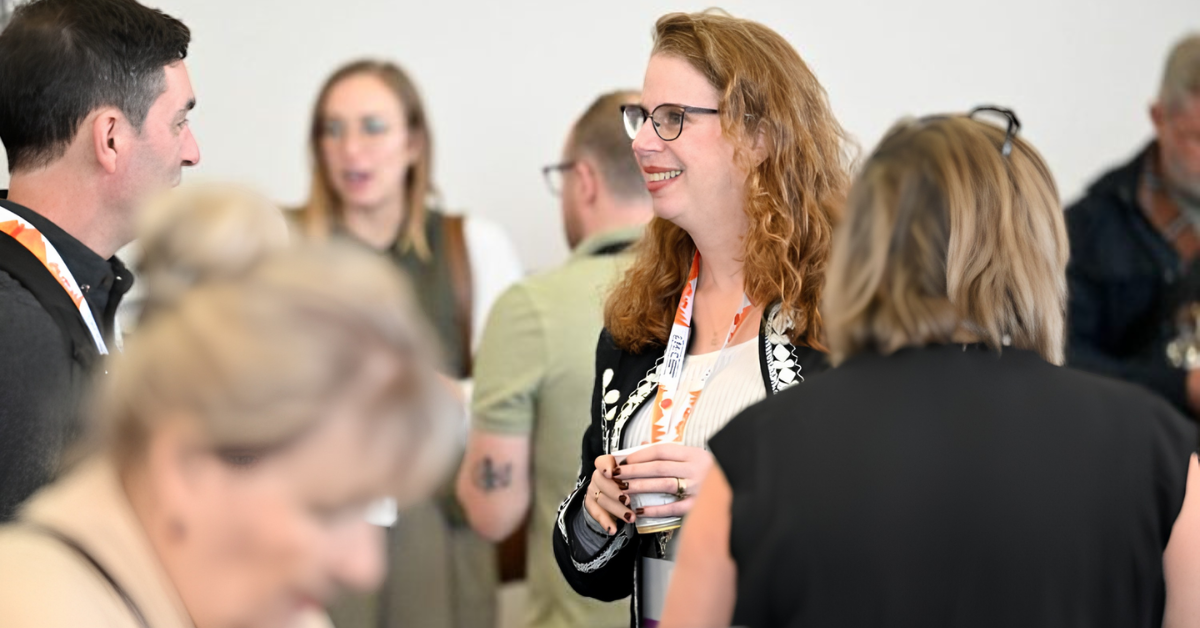
On Monday, I joined Canadian postsecondary leaders, policymakers, and other experts for a half-day of workshops on AI and the future of higher education. Having recently spent time with international leaders in AI and higher education in Stockholm, I came to the discussion with a perspective—which I think deserves more attention—that universities are workplaces, too.
How faculty experience and use AI in their own work influences how comfortable they are bringing it into the classroom. Yet discussions about AI in higher education often separate teaching and learning from the changing nature of work within institutions themselves. AI doesn’t respect those boundaries.
We’re experiencing something similar at Challenge Factory. Our conversations with clients about AI are closely connected to how we’re using it to rethink and redesign our own work. This firsthand experience helps us see connections between organizational change, learning, and the future of work that might otherwise be overlooked.
Tuesday | Taking Canadian expertise beyond our borders
On Tuesday, I explored a potential collaboration with a global consulting firm, a conversation that came about through an introduction from the Government of Canada. For a small Canadian business, introductions like this are both important commercially and a signal of our credibility in the market.
We’ve spent years developing expertise that brings together career development, workforce strategy, and research across sectors. Working with international partners creates opportunities to apply that interdisciplinary perspective in new settings, while learning from the experience and capabilities they bring.
It’s also a reminder of something I’ve come to appreciate about Canada’s role on the world stage. We have more international trade agreements in place than any other country, affording us access and the ability to develop sophisticated perspectives that include nuance. Our relationships are varied, but our value is consistent, drawing on different perspectives and real-world learnings.
Wednesday | Building stronger institutions and communities
Wednesday’s conversations took me in three very different directions. One focused on developing a campus-wide career development strategy. Another explored how Black-led youth organizations can help shape labour market solutions. A third examined the workforce infrastructure needed to support Canada’s agricultural sector as it navigates pressures from tariffs and AI.
Moving between these conversations highlighted for me the importance of distinguishing the immediate pressures facing an organization or industry from the longer-term changes already taking place. Workforce challenges don’t exist in isolation from business strategy or economic change. Understanding how these forces interact can reveal problems and possibilities that might otherwise go unnoticed. This is a way of working that has allowed our small team to contribute across sectors without treating challenges as interchangeable.
Thursday | Connecting ideas and generations
Thursday brought me a different mix of work. I collaborated with international partners on workforce innovation, explored commercial opportunities in Singapore, contributed to a book on leadership and career development, and recorded a podcast with an emerging professional in Europe about entrepreneurship and careers.
Unlike the first half of my week, which was largely informed by specific client needs or partnerships, Thursday’s activities reflected a common theme in Challenge Factory’s work. We’ve developed global expertise in longevity and work, particularly in helping governments and organizations capitalize on the potential created by ageing populations and intergenerational workforces. Seeing this expertise valued in such different settings is especially rewarding when I think about the size of the team behind it.
Friday | Building our own future
After a week of exciting work with clients and partners, Friday brought my attention back to Challenge Factory itself. I spent time with our new General Manager, thinking about how we’re preparing the business for its next stage of growth. Of everything that happened this week, this may have been the most significant for me as a small business owner.
I spend much of my professional life helping other organizations anticipate workforce change and prepare for the future. Leading Challenge Factory means taking that same responsibility for our own team. Bringing a General Manager into the business strengthens our ability to support our employees, respond to growing client needs, and prepare for the opportunities ahead.
Of course, the decisions involved in growing a small business are very different in scale and complexity from Canada’s nation-building ambitions. But my work across both organizational and national workforce challenges has reinforced one important lesson. As Canada pursues major projects and economic growth, plans and capital alone won’t be enough. We need the people and workforce systems capable of turning those ambitions into reality.
Building Canada’s future takes businesses of every size
Looking back on the week, I’m reminded why I’ve never believed that being a small business should limit our ambitions. We know what we know, and we’ve learned that we don’t have to pretend to be bigger than we are to contribute to work of national and international significance.
We’ve also learned to recognize what we don’t know and to value the partners who bring different perspectives and capabilities to the work. Some of the most interesting things we’ve accomplished have come from joining forces with others, each contributing something the other couldn’t provide alone.
I see a parallel with Canada’s role as a middle power.
Canada’s influence doesn’t depend solely on its size or economic strength. It also comes from knowing where we can make a meaningful contribution, developing trusted alliances, and bringing our particular capabilities to challenges that no single organization or country can address alone.
As Canada strengthens its leadership on the world stage, I hope more small business owners will look beyond the boundaries of their own businesses and consider where their expertise could make a difference. We have much to contribute to the difficult, exciting work of shaping Canada’s future.
Lisa Taylor is a global authority on the future of work and the systems that shape it. As Founder and CEO of Challenge Factory, she advises governments, multinational organizations, and C-suite executives navigating workforces redefined by AI, longer working lives, and accelerating change. She is the author of multiple books including The Talent Revolution: Longevity and the Future of Work (University of Toronto Press) and a sought-after media commentator who has been featured in The Globe and Mail, Forbes, CBC, Toronto Star, OECD Future of Work reports, and more.